Industry Insights
THE THINKING BEHIND: TOUCH POINTS
-
Location
New Zealand
At Lloyd Hartley, we give these interactions the same attention as the rest of the architecture, considering both how they feel to use and how they connect to the building around them and to our clients both physically and metaphorically.
We call them touch points, or sometimes, if we’re very lucky, ‘moments of embrace’. Where we meet the building, and it meets us.
The Handshake of the Building
Finnish architect and educator
Juhani Pallasmaa described the door handle as the “handshake of the building”. It’s one of the first points of physical contact we have with a home, and gives us an immediate sense of what lies beyond.
Touch tells us things about a building that our eyes can’t. The weight of a handle, the temperature and texture of the material, even the resistance as we turn it, all contribute to the experience. Consciously, we might not register the interactions, but they still leave an impression. This is why we, as architects, see them as an opportunity to make a positive impact.
Recurrence and Resonance
When we design a front door handle, we consider how it looks and feels in the hand, as well as how that first interaction links to the next.
We think about this relationship a little like music, where the same idea can be repeated in slightly different forms. An architectural detail introduced in one area of the home might be echoed elsewhere; the same melody, but in a different key.
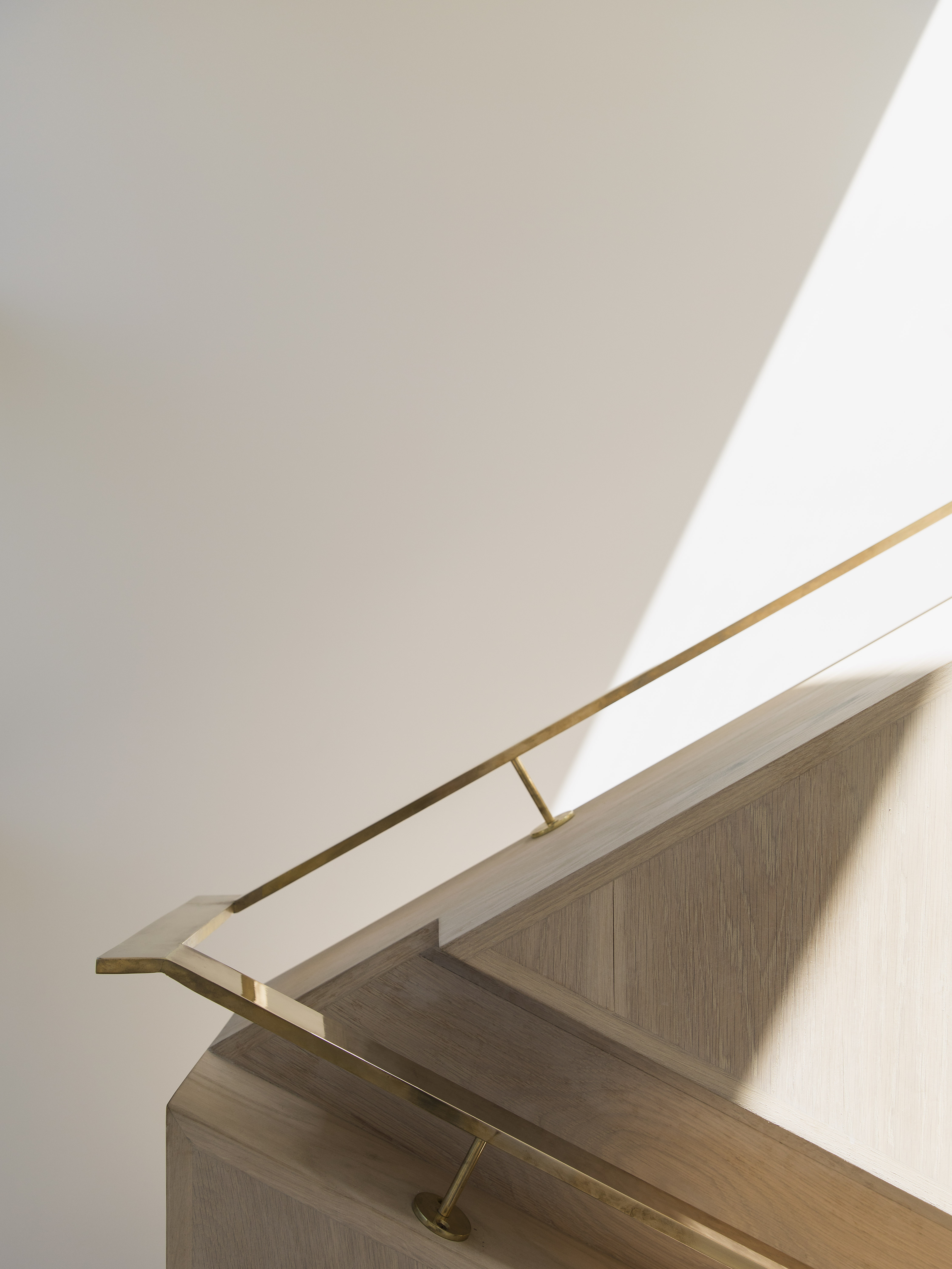
At Herne Bay Hideaway, we used brass for the front door handle, with the balustrade visible beyond repeating the same angle. Using the same materials and angle for both creates a relationship that carries the design from the entrance further into the home.
The use of brass then informs other areas of touch; brass taps and light switches lead to a consistency of feel that is maintained throughout the home.
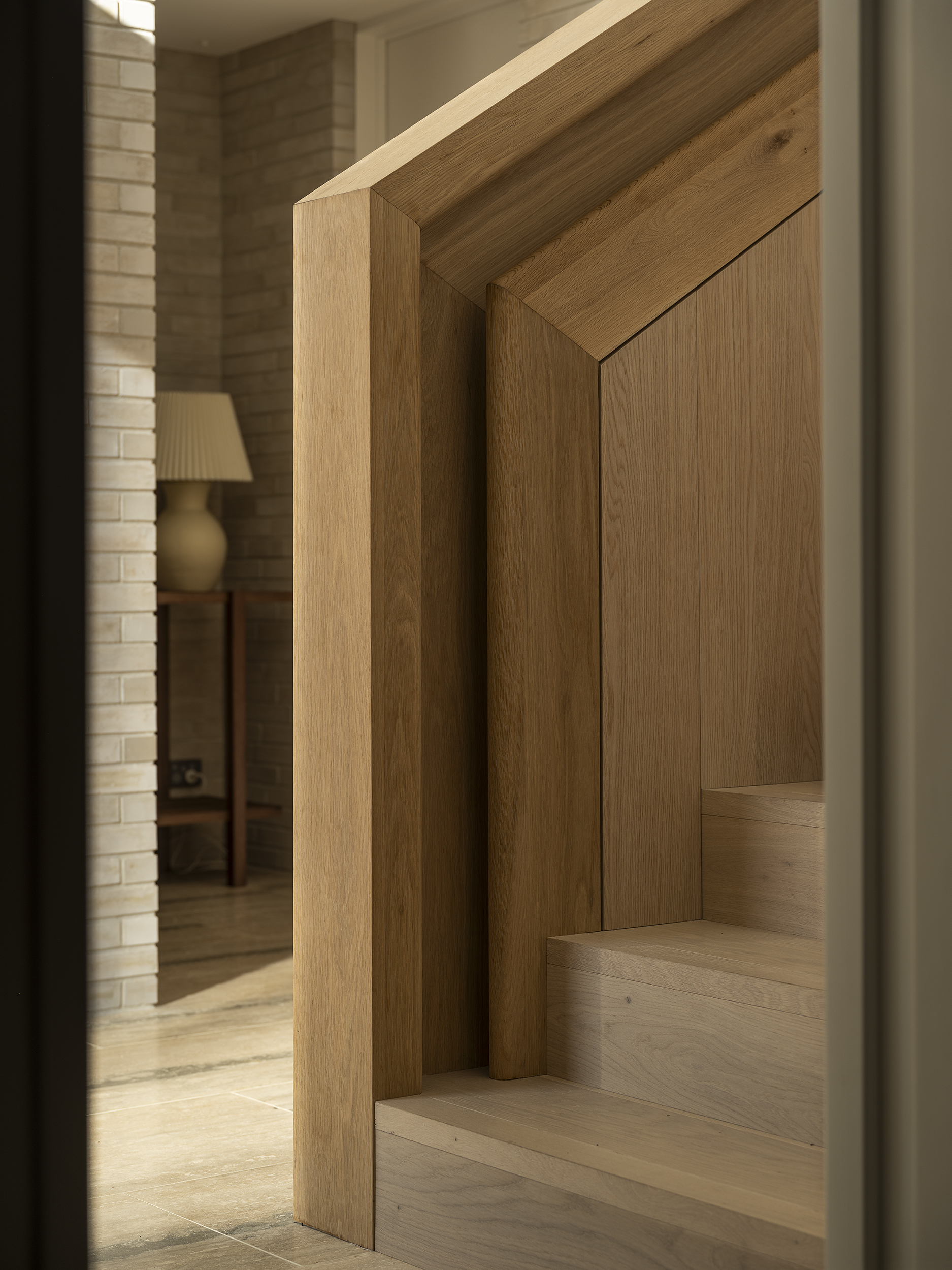
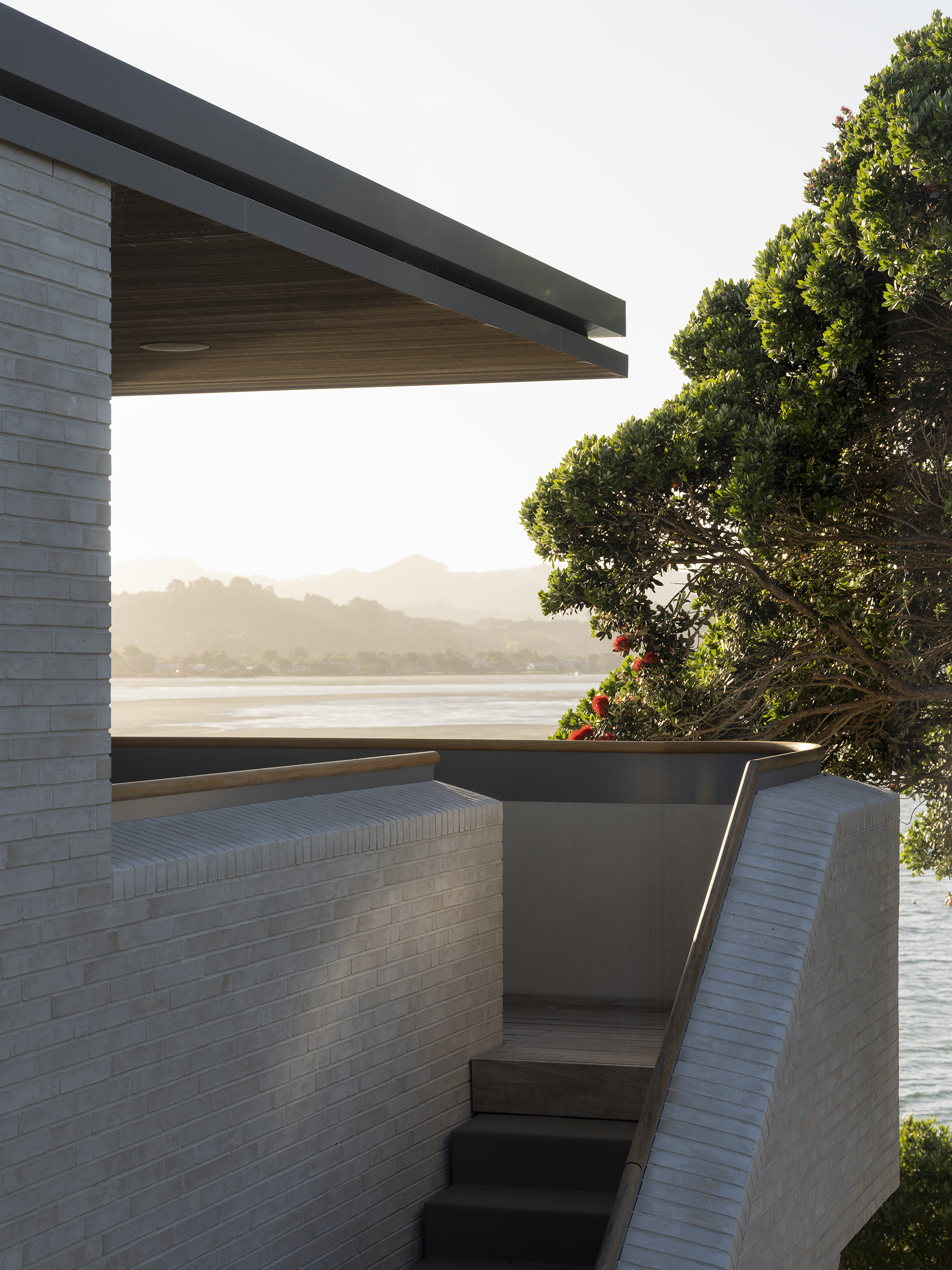
At Sandtrap, we designed internal and external handrails, both of which feature a curved edge. Having finalised their shape, we used that to inform the front door handle, creating a similarly curved edge that ties the elements together.
This all comes back to our focus on designing holistically. Rather than choosing each element in isolation, we consider everything in relation to everything else, creating subtle connections throughout the building.
Buildings That Tell Stories
Touch points also give us an opportunity to create something completely specific to the people or building we’re designing for.
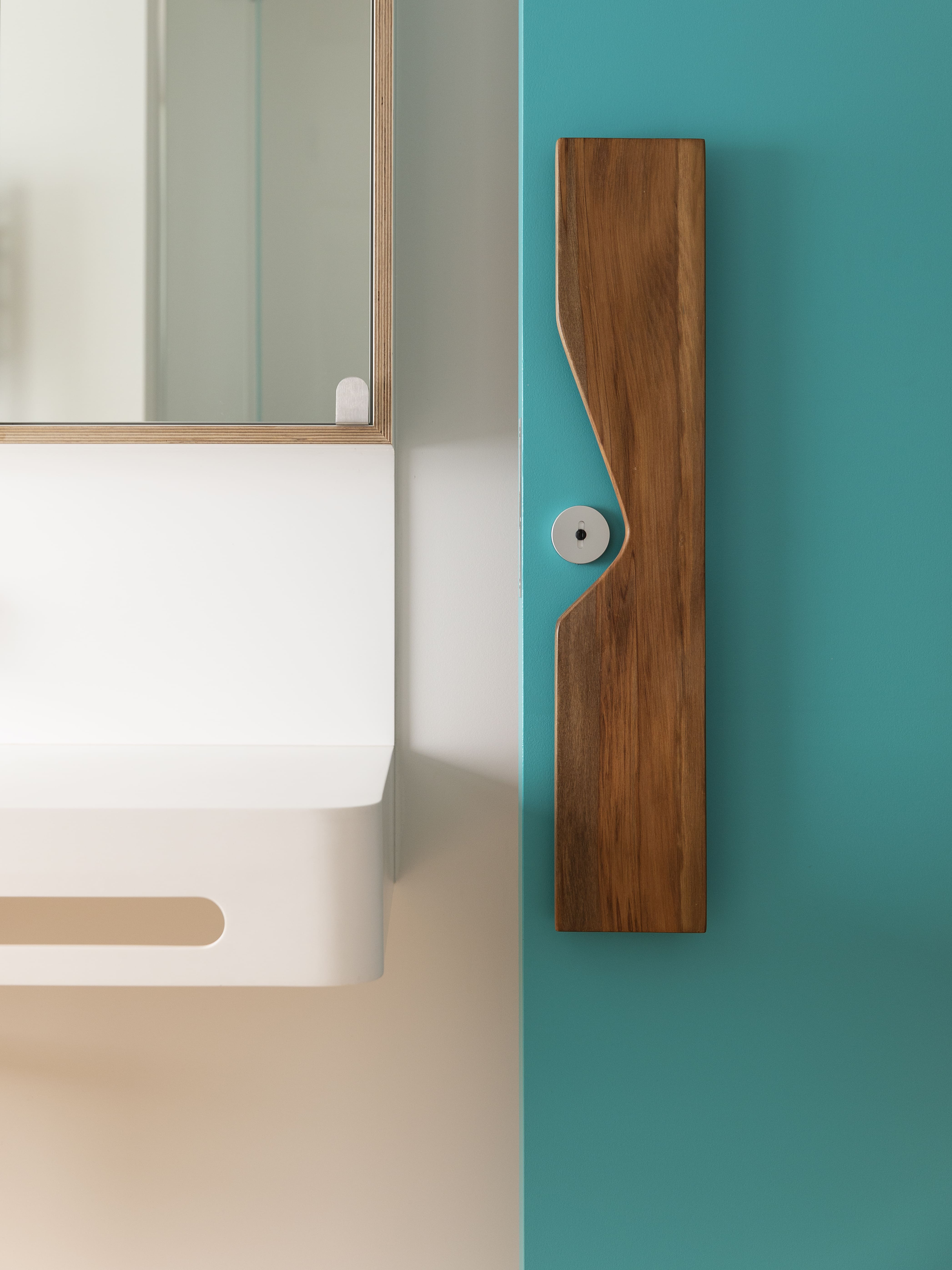
A great example is Mike’s own 1950s cottage, where door handles were crafted from weatherboards removed during the home’s renovation. The weatherboards continue to form part of the house, with their narrow, bevelled edge creating a natural nook for fingers to find purchase.
And the story doesn’t stop once the project is complete. Materials continue recording the history of a home. Brass develops a patina, and timber softens with touch, turning the surfaces we interact with into a record of time.
Living With the Details
A door handle, tap, light switch, or handrail may be a small part of an architectural project, but those familiar touches will become daily interactions with your home. That’s why we believe they’re worth getting right, because good architecture isn’t only about what’s built, but how it meets you every day.
If you’re planning a new build or renovation and want to embrace the details, get in touch with Lloyd Hartley.